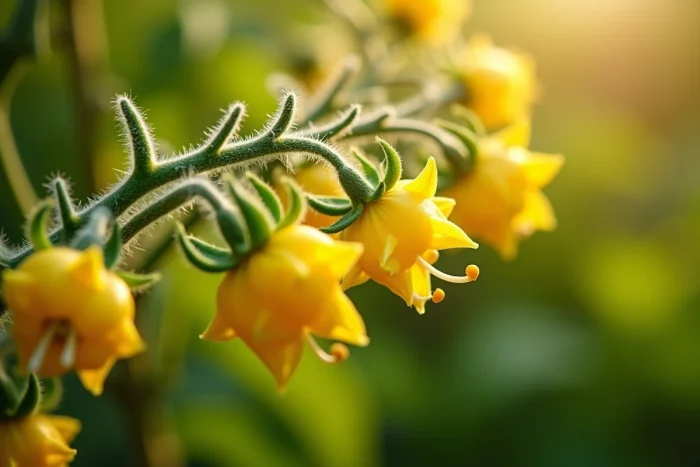
The life cycle of the tomato, from seed to harvest, spans a total duration of four to seven and a half months depending on the variety and growing conditions. Each phase, germination, vegetative growth, flowering, fruit set, and fruiting, follows precise physiological mechanisms that determine the quantity and quality of the harvested fruits.
Fruit Set of the Tomato: The Fragile Link Between Flower and Fruit
Fruit set refers to the moment when the fertilized flower begins to transform into fruit. In tomatoes, this stage begins about a week after the first flowers appear.
This stage is the most vulnerable in the cycle. Nighttime temperatures play a crucial role: when they remain too high, fertilization fails. The result is a plant covered in flowers but bearing very few fruits, a phenomenon documented by INRAE and French technical horticultural stations during summer heatwaves since 2022-2023.
To understand the overall life cycle of the tomato, fruit set deserves special attention as it conditions the effective transition from flowering to fruiting.
The pollination of the tomato relies on a vibrational mechanism: pollen is released when the flower vibrates. In the open air, wind and bumblebees perform this task. Under greenhouse conditions, trials conducted in Europe since 2020 show a trend towards the use of electric vibrators as an alternative to bumblebees, particularly after episodes of colony mortality and regulatory constraints on the importation of commercial pollinators. CTIFL and Dutch greenhouse producers have reported on this work.
Flowering and Pollination of the Tomato: What Triggers Fruit Set
The first flowers generally appear between three and six weeks after transplanting the seedlings. In tomatoes, the flowers are self-fertilizing: they contain both male and female organs and can theoretically fertilize themselves.
In practice, spontaneous self-fertilization remains partial. The mechanical vibration of the flower is necessary to release the pollen from the anthers. Without this stimulation (wind, insects, human intervention), the fruit set rate drops significantly.
Factors Limiting Pollination
- Excessively high relative humidity makes the pollen sticky and prevents its proper dispersion within the flower
- Excessive daytime temperatures reduce pollen viability even before it reaches the pistil
- The absence of pollinators in greenhouses necessitates the use of reared bumblebees or vibrators; otherwise, a significant portion of the flowers abort
This link between climatic conditions and the success of pollination explains why two identical plants, grown a few weeks apart, can yield very different harvests.
Fruit Enlargement and Light Management During the Fruiting Stage
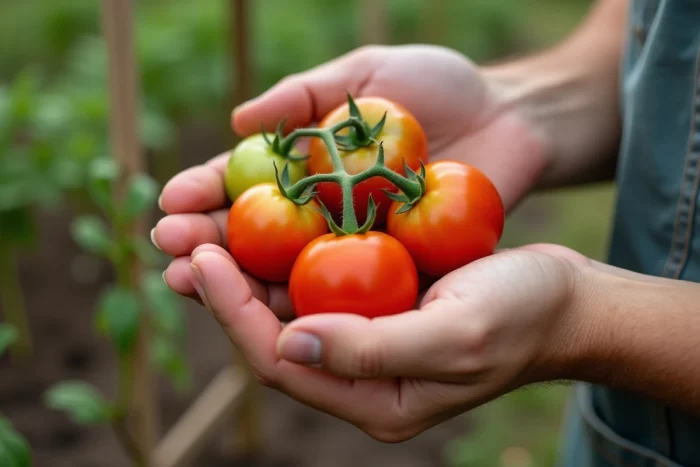
After fruit set, the fruit enters a phase of rapid enlargement. The cells of the fruit multiply and then elongate, and the tomato accumulates water, sugars, and organic acids. When the ripening conditions are favorable, the fruits can be harvested about a month after fruit set, which is three to four months after sowing.
Light management during this phase has become a major technical challenge. Since 2021, in southern Europe, the use of shading nets or cloths has been increasingly recommended by technical centers to limit two concrete problems:
- Sunscald on the fruits, which causes whitish or yellowish areas on the skin, rendering the tomatoes unsellable
- Flower drop due to thermal stress, which directly reduces the number of fruits per cluster
- An imbalance between leaves and fruits when the plant prioritizes vegetative survival over fruiting
Partial shading does not significantly reduce yield when calibrated. It protects the fruits without blocking the photosynthesis necessary for sugar accumulation.
Tomato Harvest: Physiological Maturity and Harvest Duration
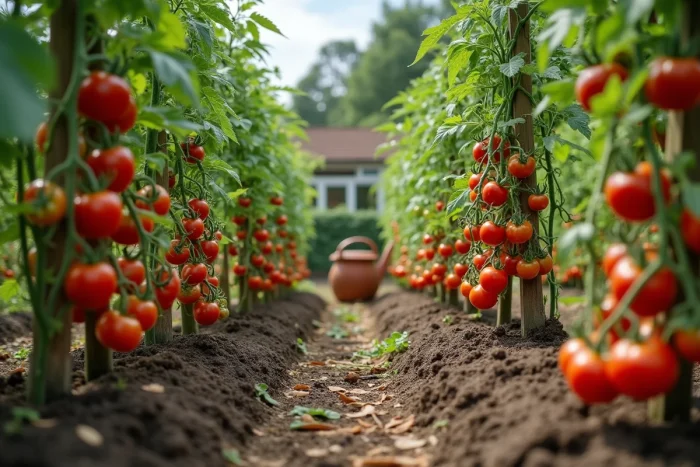
The harvest is not a one-time event but a spread-out period. Depending on the growing conditions and pest pressure (birds, fruit flies), the harvest window varies from less than a month to over two months. Indeterminate growth varieties, which continue to flower and produce fruits as long as conditions allow, naturally extend this period.
The maturity of a tomato is not judged solely by its color. The change in hue, usually from green to red, signals the degradation of chlorophyll and the accumulation of lycopene. At the same time, the texture of the fruit changes, and the seeds inside reach full viability, allowing them to be saved for later sowing.
Harvesting at the Right Stage According to Use
For immediate consumption, harvesting occurs at full maturity, when the fruit easily detaches from the peduncle. For transport or storage, a slightly earlier harvest, at the “turning” stage (beginning of coloration), allows the fruit time to ripen off the plant without becoming overly soft.
Tomatoes can be grown year-round under cover, but in open fields, the rainy season poses a risk for ripe fruits, which are sensitive to cracking and fungal diseases. Therefore, the choice of sowing period conditions the harvest window as much as the variety itself.
Each stage of the cycle, from germination to the last harvest, imposes its own constraints of temperature, light, and pollination. The most productive plants are not necessarily those that flower the most, but those whose fruit set has been properly secured by favorable nighttime conditions and effective pollination.