When an attack occurs in a city associated with glamour and red carpets, the first accounts do not come from news channels. They arrive in snippets, on trembling phones, in fragmented voice messages. The attack in Cannes produced this type of raw testimony, captured before any media formatting, and reading them changes the understanding of what happened on the ground.
Tourist security in Cannes: what witnesses reveal about the flaws
Large security measures in France are designed for massive events: festivals, matches, international summits. Tourist cities like Cannes have protection plans calibrated to their event calendar. Off-season, or outside covered areas, the density of surveillance drops.
The accounts gathered from witnesses of the tragedy highlight a clear gap between the perception of security and operational reality. Several people present describe entire minutes without visible intervention, in streets that were nonetheless busy. This delayed timeline is found in many testimonies published after the attack in Cannes today on U Games, where panic precedes any coordinated response.
Tourist areas outside the event perimeter remain blind spots. This observation does not come from an official report, but from the convergence of several on-the-ground accounts. Merchants, passersby, hotel employees all describe the same void: no fixed police presence at the time of the events in the affected area.
Testimonies of the Cannes attack: panic before words
We often talk about testimonies as constructed narratives. On the ground, what strikes first is their fragmented nature. Witnesses of the tragedy in Cannes do not tell a linear story. They convey sensations: a dull noise, a smell, a sudden movement of the crowd without an identifiable cause at the moment.
This type of “hot” testimony has particular value. It captures details that the reshaped memory later erases. The November 13 Program, led by the CNRS and Paris 1 Panthéon-Sorbonne under the direction of Denis Peschanski, documented this phenomenon on a large scale after the attacks of 2015: witness memory restructures in the weeks that follow, and the first accounts are often the most reliable regarding the raw facts.
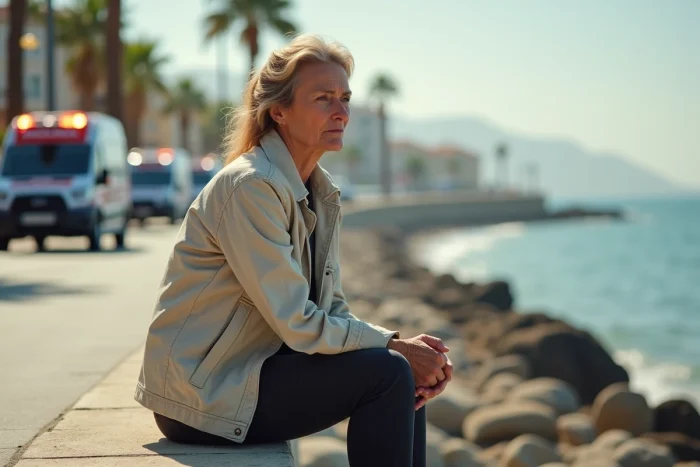
In Cannes, several witnesses describe a common reflex: looking for an open business to take shelter. Hotels and restaurants played a role as spontaneous refuges. This behavior appears in almost all accounts, raising a concrete question about the training of reception staff in tourist areas.
What on-the-ground accounts teach crisis management systems
Testimonies collected after a so-called “low-profile” attack (an attack outside a major event, in an unsecured open location) shed light on flaws that post-Bataclan analyses have not covered. Major attacks generate feedback focused on inter-agency coordination, security perimeters, and advance intelligence.
Attacks in ordinary tourist areas pose a different problem:
- The initial alert comes from civilians, not law enforcement, with a transmission delay depending on the local telephone network and the saturation of emergency calls
- Gathering points are not identified by passersby, who disperse in a disorderly manner in unfamiliar streets
- Staff in businesses and hotels have received no specific training to manage the influx of panicked people, unlike event security agents
The hybrid terrorist threat is no longer limited to symbolic targets. The accounts from Cannes show that vulnerability lies in everyday tourism, not in moments of high media visibility.
Memory of attacks and victim narratives: beyond media treatment
The Terrorism Memorial Museum has been collecting testimonies from victims and witnesses of attacks in France for several years. This memory work is based on individual accounts, often delivered months or years after the events. Their function goes beyond mere reporting: they contribute to the construction of a collective memory.
In Cannes, there is a gap between the initial media treatment (focused on the toll and claims) and what witnesses actually recount. The accounts of witnesses first speak of spontaneous solidarity: a stranger pulling someone by the arm, a hotel door held open, a waiter guiding tourists to a back exit.
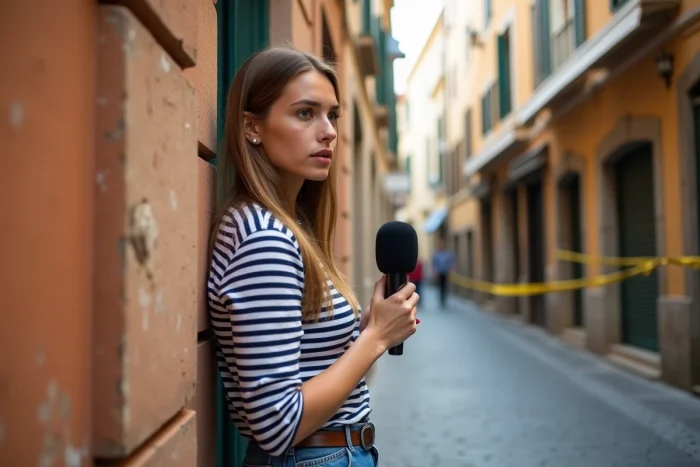
These details do not make the headlines. Yet they are what allows us to understand how a city reacts organically to an attack, outside of any official protocol.
Exclusive testimonies: the voices of direct witnesses
Among the accounts gathered, some describe scenes of lasting confusion. One witness mentions ten minutes during which no one around him knew whether it was an attack, an accident, or a brawl. This prolonged uncertainty amplifies post-traumatic stress, according to the work of the November 13 Program.
The question of disseminating these testimonies also arises. Feedback varies on this point: some victims find relief in public speech, while others describe an instrumentalization of their account by the media. The conference “2015 – Narratives and Fictions of Terrorism,” organized in 2023 between Paris 1 Panthéon-Sorbonne, Sorbonne Nouvelle, and The American University of Paris, specifically questioned this boundary between raw testimony and narrative construction.
Anti-terrorism training in tourist areas: a persistent blind spot
Australia has adopted since 2024 a model of “immersive testimonies” via virtual reality to train rescuers, according to the report from the Australian Institute of Criminology (AIC Review 2025-2026, published in February 2026). This approach, which immerses agents in reconstructed accounts from real witnesses, is said to have reduced recurrence of stress among responders.
In France, nothing comparable exists for tourist staff. Hoteliers and restaurateurs in Cannes have no reception protocol in the event of an attack. Simulation exercises concern law enforcement and emergency services, rarely the commercial fabric that constitutes the first point of contact for fleeing civilians.
The testimonies from Cannes confirm this: the immediate response does not depend solely on the police or firefighters. It also relies on simple, uncoordinated gestures from people who have never been prepared for such situations. It is in this space that the real protection of tourists takes place, far from the large measures designed for media-covered events.