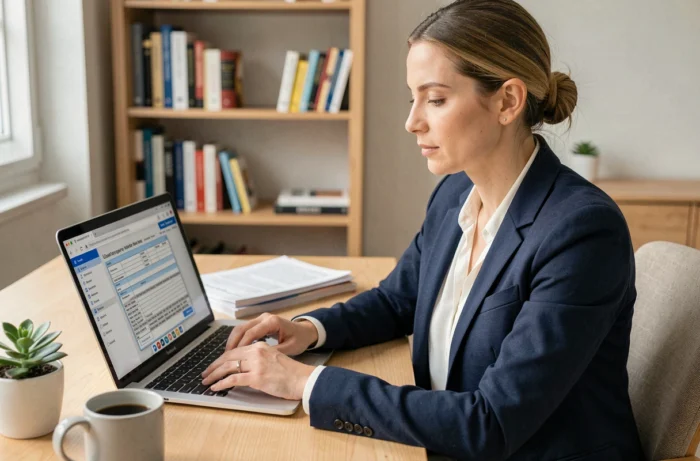
Every application for a temporary visa to the United States requires the DS-160 form, hosted on the U.S. Department of State’s website. This online form collects the applicant’s personal, employment, and travel information. It is mandatory: no consular interview can be scheduled without it. The DS-160 is required for tourist visas (B1/B2), student visas (F1, J-1, M1), and temporary work visas.
Correcting an error on the DS-160 after submission
Once the DS-160 has been submitted and the confirmation page generated, the system no longer allows you to edit your saved answers. This can create a practical problem: a typo in a passport number, a transposed date of birth, or a misspelled former employer cannot be corrected on the submitted form.
There are two options, depending on the severity of the error. For a minor typo (a slightly misspelled first name or an incomplete address), most U.S. consulates in France allow applicants to point out the correction during the interview. Simply bring supporting documentation (such as a passport or certificate) showing the correct information.
For a significant error (an incorrect passport number, visa category, or travel information), you must complete a new DS-160 in full. The consulate cannot amend the existing form. The new confirmation number then replaces the old one in your appointment file.
Applicants for F1 visas to the United States and U.S. visa appointments should check every field before submitting, as completing a second form means entering all the answers again. The Department of State recommends printing the confirmation page and reviewing the summary of your information before ending the session.
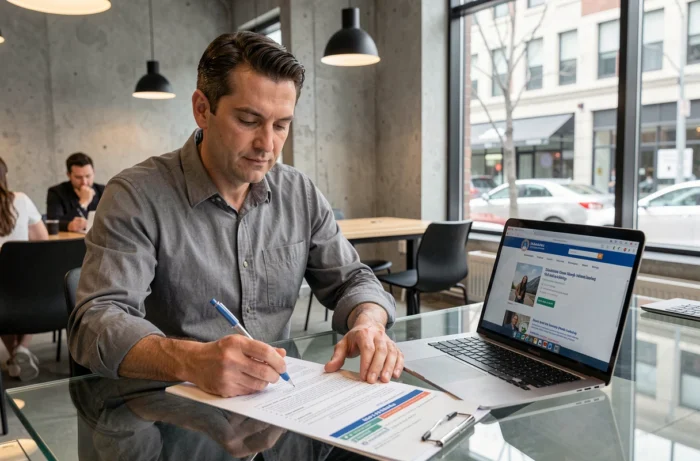
Completing the DS-160 form: sections that can cause problems
The DS-160 consists of around twenty pages of questions organized by topic. Some sections frequently lead to errors, not because they are technically complex, but because they ask for information applicants may not have readily available.
Identity and passport
The form asks for your passport number, expiration date, country of issue and, if applicable, the numbers of previous passports. Any discrepancy between the DS-160 and the passport presented at the interview may result in a refusal or postponement.
Travel and employment history
The employment section asks for the name, address, and phone number of your current employer and your two previous employers. Gather this information before starting the form, as the system will end your session after a period of inactivity.
Social media
The DS-160 includes a section asking for your social media identifiers. This question is only optional in appearance: leaving the field blank when you have public accounts may raise questions during the interview.
- Prepare the exact usernames (not URL links) for each platform you have used recently
- Check that your public profiles do not contain anything that conflicts with the information provided on the form
- If you deleted an account, it is better to mention it than to omit it
Digital passport photo: DS-160 technical requirements
Uploading a compliant photo is a stumbling block for a significant number of applicants. The form automatically rejects files that do not meet the technical specifications, without always clearly explaining why.
The background must be white or off-white, and glasses are not allowed in the photo, including non-prescription frames. The file must meet the format and dimensions specified on the Department of State’s website or it will be automatically rejected.
A common pitfall is taking a photo in a traditional photo booth and then scanning it: the resolution is often too low, and the framing does not match the required ratios. Using a digital camera or smartphone against a plain white background is the most reliable approach. Most consulates will also ask you to bring the same photo in printed form on the day of your interview.

Consular interview in France: what the DS-160 does not prepare you for
The DS-160 collects factual information. The interview, by contrast, assesses the credibility of your plans and your ties to your home country. These two steps complement each other, but success at the first does not automatically guarantee success at the second.
The consular officer can see your DS-160 on screen during the interview. They may ask about any answer on the form, including sections that seem routine (U.S. contacts, how you will fund your stay, previous trips). Any inconsistency between the form and your spoken answers can weaken your application.
Supporting documents are not uploaded to the DS-160. They must be presented in person at the embassy or consulate on the day of your appointment. The list varies depending on the type of visa you are applying for:
- A valid passport that expires at least six months after the end of your planned stay
- A printed DS-160 confirmation page with a legible barcode
- Proof of financial support (bank statements, scholarship letter, sponsorship letter)
- For a student visa: Form I-20 issued by a SEVP-approved institution and proof of payment of the SEVIS fee
Appointment wait times vary by consulate and time of year. It is advisable to submit the DS-160 well ahead of your planned departure to allow for potential delays.
The DS-160 is just one administrative step in a process that requires consistent documentation and interview preparation. Completing every section with accurate information, ensuring your photo meets the requirements, and anticipating the consular officer’s questions are three practical ways to avoid a refusal or a postponed appointment.