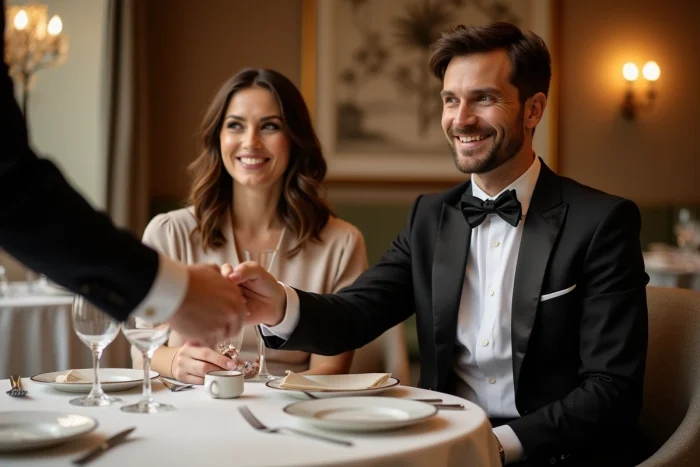
The numbers don’t lie: every year, millions of euros discreetly circulate among the restaurant staff, moving from the tip jar to their pockets, sometimes under the knowing gaze of a chef or a sommelier. In France, service has been included in the bill since 1987, but staff in Michelin-starred restaurants continue to receive tips, often seen as an additional sign of appreciation. Practices vary significantly from one table to another, sometimes contradicting the expected norms in traditional dining.
Some exceptional establishments discreetly incorporate additional service charges, while others leave the decision up to the customer, resulting in notable discrepancies in the amounts left. Habits also differ by country, adding to the confusion surrounding the etiquette to adopt.
Tipping in a Michelin-starred restaurant: customs, expectations, and little anecdotes
In Paris and elsewhere, tipping in a gourmet restaurant reveals the nature of the relationship between customers and staff. There is a balance between inherited codes and modern flexibility: service is already included on the bill, but the extra attention makes the difference. Some leave small coins, others opt for a neatly folded bill, while some abstain altogether: this dance intrigues even the most seasoned teams.
The subdued atmosphere of a Michelin-starred restaurant leaves nothing to chance. Here, the seasoned customer knows that the experience goes far beyond the plate. The tip then takes on a unique dimension. Imagine: a perfectly synchronized team, a chef away from the spotlight, an attentive sommelier. In this context, even the smallest gesture, the tip in a Michelin-starred restaurant, becomes both a mark of gratitude and a signal sent to the entire team. Sharing this gesture, even modestly, strengthens the ranks, nurtures a sense of belonging, and reinforces mutual recognition.
The expectations of the staff remain measured, but anecdotes abound. Some foreign visitors, accustomed to different customs, sometimes leave generous tips, sparking lively conversations in the kitchen. Others, long-time regulars, slip the same envelope each year: recognition is then woven into the regularity of the gesture. And beyond the amount, it is often the look, the words, the politeness of the exchange that imprint themselves in the collective memory of the service.
To explore in more detail the customs, appropriate amounts, and subtleties of etiquette, the following resource proves invaluable: tipping in a Michelin-starred restaurant. Analyses, advice, and feedback enrich the understanding of a practice that evolves with the seasons and renowned establishments.
Should you always leave a tip? Understanding the amounts and rules that really matter
In a Michelin-starred restaurant, the question of tipping is never automatic. The presence of service included on the bill, a principle well established in France since the Godard law of 1933, distinguishes the country from its European neighbors. According to the labor code and the finance law, the tip depends entirely on the customer’s discretion: no text imposes a scale, and no constraints exist.
Yet, practices differ. In Paris, Lyon, or a seaside palace, some round up the bill, while others prefer to add a few coins or a bill. The amount of the tip in a prestigious establishment mainly depends on the perceived quality and the memory left by the service. Generally, gestures between 5 and 10% of the total are observed, but the exceptional sometimes invites generosity.
The question of tip distribution is settled as a team. Depending on the rules displayed (or decided internally), the collected sum can be shared according to different logics:
- the dining room receives a share,
- the kitchen receives another.
This sharing, whether transparent or not, often becomes a topic of discussion at the end of service, reinforcing the collective spirit of the brigade.
The taxation of tips has changed: since 2022, a lighter social and fiscal regime applies to the employees concerned, provided they respect the ceilings of the SMIC and the reference tax income. This gesture, once purely spontaneous, also becomes a marker of modernity for the profession: it reflects the evolution of the sector, the valorization of the collective, and the daily commitment of all actors in both the dining room and the kitchen.
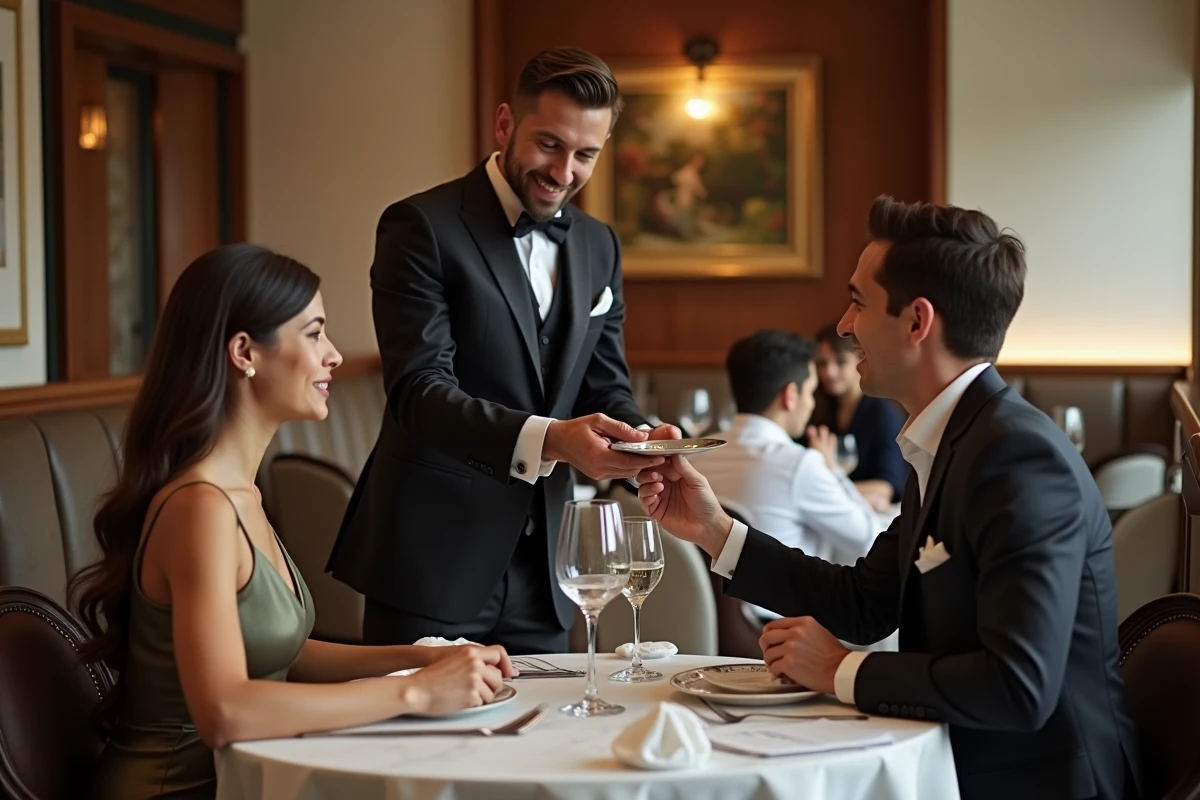
Smart tips for an appreciated tip: politeness, etiquette, and cultural variations
Tipping in a Michelin-starred restaurant requires a certain savoir-faire. Politeness comes first: thanking the staff with a word, a smile, or a sincere gesture. In these establishments, the human relationship shapes the customer experience as much as the quality of the dish. Acknowledging the work done goes far beyond a simple monetary exchange.
The credit card has become the norm in most gourmet restaurants. On the electronic payment terminal (TPE), some establishments directly display the tipping option. If this is not the case, ask in the dining room: you can then slip coins or bills into the tip jar. This evolution facilitates transparency and equitable distribution of the gesture.
Here are some guidelines to better understand the differences according to locations and cultures:
- In France, the tip always adds to the included service, without obligation.
- In other European capitals, like London or Berlin, the practice differs: as service is not always included, amounts can rise from 10 to 15%.
- In Paris, discretion remains key: simplicity prevails, and it is better to avoid any excessive display.
In the restaurant industry, every gesture counts. Leaving a few euros for the team is a recognition of the care taken, reinforcing cohesion and encouraging collective standards. This attention nourishes the shared experience: that of the customer, that of the server, that of the place. Ultimately, the tip is part of this delicate alchemy that transforms a meal into a lasting memory.