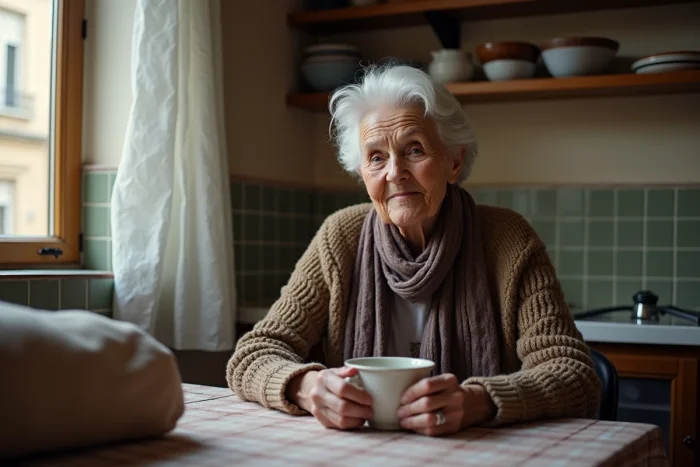
You don’t quadruple the share of a population in thirty years without disrupting the balance of a country. Between 1991 and 2021, France saw a surge in the number of its nonagenarians: a progression that shapes, year after year, the new face of aging in France. Behind the numbers lies a mosaic of realities: women overwhelmingly dominate this age group, and the contrast from one region to another is striking. Public policies can no longer afford to procrastinate; here, demographic urgency sets the pace. The acceleration of demographic aging in France alters the population structure and presents decision-makers with unprecedented challenges. Projections from Insee anticipate a trend that solidifies year after year, with a profound impact on collective health, care, and support for the elderly.
Aging in France: how is the population of nonagenarians and centenarians evolving?
The French demographic trajectory shows no signs of weakening: today, the country is approaching 900,000 nonagenarians and has surpassed 30,000 centenarians, a reality made possible by decades of improved life expectancy and changes in our lifestyles. This shift is reflected in the numbers, where the proportion of those over 90 is skyrocketing. Those interested in the percentage of nonagenarians in France can immediately see the transformation this entails: reaching the age of 90 is no longer exceptional.
Women represent nearly four out of five nonagenarians. The longevity gap between the sexes is confirmed generation after generation, driven by biological as well as social and economic factors. This imbalance does not diminish, and according to researchers, it is expected to persist in the coming decades.
The aging map of France is not homogeneous. The South and West show the highest rates, where environmental conditions and the maintenance of family ties seem to promote longevity. Projecting oneself in Paris or Brest reveals how local anchoring, community dynamics, and neighborhood solidarity influence old age. Here, aging is also embedded in the social fabric of the territories.
Key figures: what the latest data reveals about those over 90
A striking observation emerges from the latest statistics published by Insee: nearly 900,000 French people aged 90 and over currently live in France, six times more than at the very beginning of the 1980s. This leap is not abstract; it is observed in every family, across entire generations that are advancing in age and reshaping our references.
To better grasp the magnitude of this phenomenon, here are some notable figures:
- Nearly 80% of nonagenarians are women: the gender gap widens significantly over time, a consequence of higher male mortality at all ages.
- The number of people over 90 has doubled in the last forty years. Depending on the generation, access to very old age is becoming significantly more common: a person born in the 1930s had three times the chance of reaching this age compared to someone born at the very beginning of the 20th century.
Another reality on the ground: disparities between urban and rural areas are widening. In some rural areas, the share of nonagenarians exceeds the national average, while in metropolitan areas, growth remains more moderate. Within less than ten years, the threshold of one million nonagenarians is expected to be crossed. This aging raises questions about support: adapted housing, medical follow-up, quality of daily life… each statistical advance reveals a new challenge.
The question of “how to age” thus takes on its full dimension. Dependency, the breakdown of social ties, the evolution of family—all these issues are at the heart of the collective debate. The challenge remains to invent a society where longevity rhymes with engagement, social utility, and life projects, rather than solitude or withdrawal.
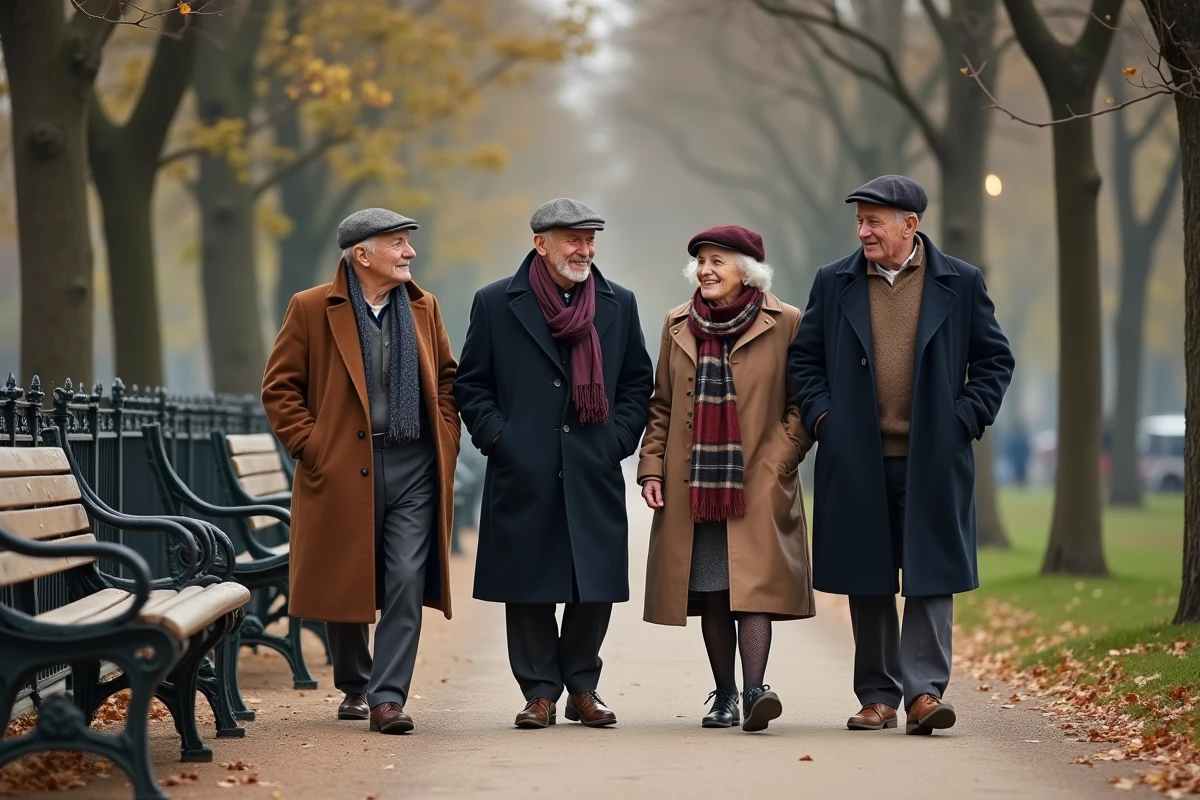
What challenges and perspectives face the rise of extreme ages? Resources for further exploration
The surge in longevity reshuffles all the cards: public health, housing, care organization, intergenerational solidarity. More than ever, society must reinvent itself in the face of this growing mass of very elderly seniors.
To understand the complexity of these upheavals, several major challenges deserve to be outlined:
- Preserving autonomy and well-being: Gaining years is good, but preserving the quality of life that comes with it is equally important. Disease prevention, home care, and combating dependency shape the daily lives of hundreds of thousands of families.
- Rebalancing the women-men situation: The oldest women, more numerous and sometimes more vulnerable, face isolation, precariousness, and seek public assistance more frequently. Proposing measures adapted to this reality has become a collective necessity.
- Rethinking public and local policies: Care professions, urban plans, and innovative initiatives are developing everywhere to respond to the “gray wave.” The challenge? To make longevity rhyme with inclusion, mobility, security, and social ties.
Accompanying this demographic leap also means fostering new ways of aging. Testimonials, research, and experiments abound throughout the country, feeding the reflection on the pages of www.vismaviedesenior.fr. However, the massive presence of nonagenarians is no longer just a statistic: it is now shaping our identity, our solidarities, and drawing a new boundary between generations. The question remains what kind of society we will choose to build around these extended lives, and what this fundamentally says about our capacity for collective invention.