Igor Tikovoi occupies a unique place in the landscape of European music production. His signature sound is based on a hybridization of strings/orchestra, electronics, and distorted guitars that sets him apart from most French-speaking producers. This technical positioning explains why established artists seek him out at pivotal moments in their careers when they are looking to redefine their sonic identity.
Orchestral and electronic hybridization: Tikovoi’s production method
The classical training he received in Moscow has given Igor Tikovoi a mastery of arrangements for strings and winds that few pop producers possess. This academic background is not just a biographical ornament: it shapes his method of working in the studio.
Where most producers start from a rhythmic demo or an electronic loop, Tikovoi often builds his productions around a orchestral line that serves as a harmonic backbone. Electronic layers and distorted guitars are then added, creating a tension between acoustic and synthetic registers.
This process has been documented in interviews related to the sessions of Placebo and Goldfrapp, where the artists described a radical change in approach in the studio. Tikovoi did not intervene as a mere sound engineer or occasional arranger, but as the overall architect of the album’s sound.
It is this role of complete sound overhaul that earns him the designation of “bridge producer” in the British and French music press: a producer capable of bridging two stylistic eras of the same artist. You can discover Igor Tikovoi on Smart Web to explore this dimension of his journey.
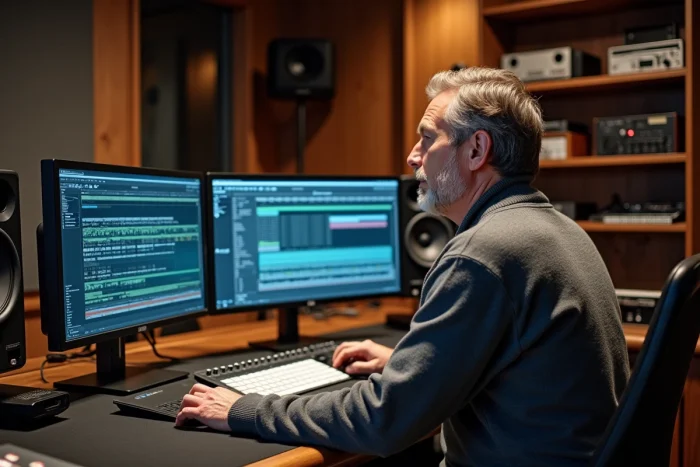
Igor Tikovoi as a producer for artists in stylistic transition
The term “bridge producer” deserves attention. In the Anglo-Saxon music industry, it designates a producer who is called not to reproduce an existing sound, but to accompany an artistic shift. Tikovoi fulfills this role with a consistency that goes beyond mere career coincidence.
Placebo, Goldfrapp, Mylène Farmer, Vanessa Paradis: the common thread among these collaborations is not the musical genre. It lies in the timing. In each case, the artist was going through a phase of sonic repositioning, seeking to distance themselves from a sound identified by the public without losing their listener base.
We observe that this specialization involves a skill rarely discussed in producer profiles: the ability to negotiate with an artist’s identity without dissolving it. A producer who imposes a personal sound creates a “producer’s album.” A producer who merely executes the artist’s vision is just doing engineering. Tikovoi’s added value lies precisely between these two poles.
Repositioning towards the independent scene since the 2020s
Existing articles on Igor Tikovoi remain largely focused on his collaborations with mainstream artists from the 2000s and 2010s. This view is incomplete. Since the early 2020s, his credited discography on professional platforms shows a gradual shift towards emerging and independent projects.
This repositioning is not trivial. It reflects a broader trend in which experienced producers leave major circuits to work with young artists who offer them more creative freedom. For a producer whose method relies on a complete sonic overhaul, the commercial constraints of major record labels can become a hindrance.
The shift to the indie scene also allows Tikovoi to push his hybridization work further. Emerging artists are more open to unconventional production proposals: orchestral layers on a lo-fi track, distortion applied to classical arrangements, song structures that deviate from the radio format.
What this shift reveals about his method
Working with less media-exposed artists does not mean a decline in production quality. We observe rather the opposite: independent projects serve as a laboratory where techniques developed on mainstream albums are refined and radicalized.
Several characteristics distinguish his recent productions:
- A more pronounced use of unconventional orchestral textures (prepared strings, woods treated with electronic effects) rather than traditional classical arrangements
- A deliberate reduction in the number of tracks per song, counter to the trend of overproduction dominating streaming
- A focus on sound spatialization that exploits contemporary listening formats, where headphones increasingly replace speakers
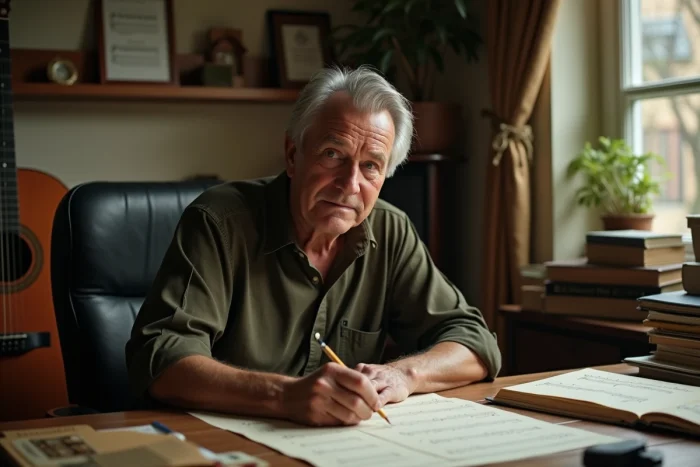
Igor Tikovoi’s international presence and Anglo-Saxon credits
Tikovoi’s French roots are often highlighted in French-speaking media, to the point of overshadowing the fact that his presence in the credits of Anglo-Saxon albums is regular, particularly on the British scene. This international dimension distinguishes his profile from that of most French producers, whose careers remain predominantly hexagonal.
The British scene, historically more open to outside producers than the American market, has provided a natural ground for his approach. The blend of continental orchestration and rock energy that characterizes his productions aligns with an aesthetic favored by London independent labels.
This dual presence in France and the UK also has a concrete impact on his working method. Production sessions alternate between studios in Paris and the UK, influencing the session musicians involved, the sound engineers engaged, and ultimately, the sonic color of the albums.
A rare composer-producer profile
The distinction between composer and producer has blurred in the contemporary music industry. Tikovoi belongs to a category of professionals who integrate both functions: composition does not precede production; both processes advance simultaneously.
This functioning requires a technical mastery that neither classical training nor studio experience alone can explain. It is the combination of both, rare in this industry, that underpins the specificity of his work.
- Classical training in Moscow providing harmonic rigor
- Studio experience gained in Paris on major pop and rock productions
- Ability to communicate with both classical musicians and electronic programmers
Igor Tikovoi’s journey reminds us that in music production, technical versatility has value only when it serves a coherent sonic vision. It is this coherence, maintained over more than two decades of varied collaborations, that explains his longevity in a sector where producers come and go quickly.