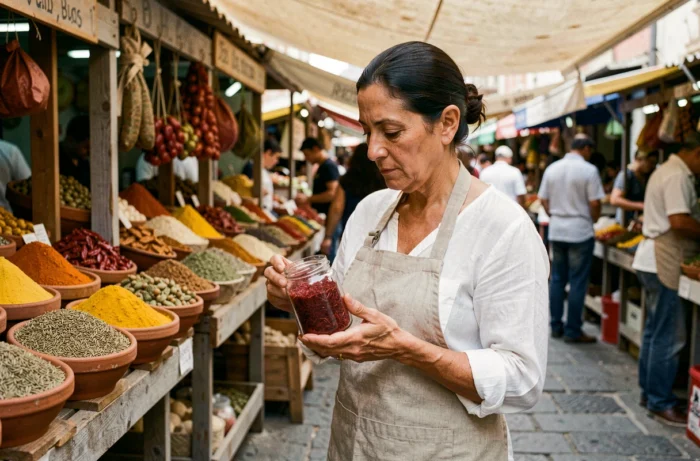
Ground cumin or whole cumin seeds, a ready-made ras el hanout blend or a homemade mix: the form of a spice can affect the flavor just as much as the choice of spice itself. Understanding the difference between a whole spice and its ground version, then tailoring storage to how often you actually use it, helps you get the most out of every seasoning without waste or loss of flavor.
Whole, ground or blended spices: a comparison of different forms
Before stocking your spice cupboard, the first thing to consider is not where a spice comes from, but the form in which you buy it. Each form has distinct characteristics in terms of shelf life, aromatic intensity and convenience.
| Criteria | Whole spice | Ground spice | Ready-made blend |
|---|---|---|---|
| Best storage conditions | Several years in an airtight container | A few months before noticeable loss of aroma | Varies according to the most delicate ingredient |
| Aromatic intensity | Released when ground or toasted | Immediate, but fades over time | Balanced when purchased, but difficult to adjust afterward |
| Convenience | Requires a mortar or grinder | Ready to use | Ready to use, with easy measuring |
| Risk of adulteration | Low (the seed or bark is identifiable) | Higher (starch or coloring may be added) | Higher (the ingredients are difficult to verify visually) |
A whole spice keeps its essential oils sealed within its cellular structure. Grinding releases these oils, and oxidation begins immediately. A black peppercorn stays fresh for a very long time, whereas ground pepper loses a significant amount of its pungency within a few weeks when exposed to air.
Blends (curry powder, quatre-épices, ras el hanout) are a welcome time-saver. Their drawback: once opened, the most volatile ingredients (ground coriander, for example) fade well before the more robust ones (cinnamon, cloves), throwing the flavor profile off balance over time.
Spice storage and frequency of use: tailor your stock
When choosing between whole and ground spices, the right question isn’t “which is better?” but “how quickly will I use what I buy?” Someone who uses cumin every day can buy a reasonable amount of ground cumin. Someone who sprinkles it over a dish once a month is better off buying whole seeds and grinding them as needed.
Here are a few practical storage guidelines:
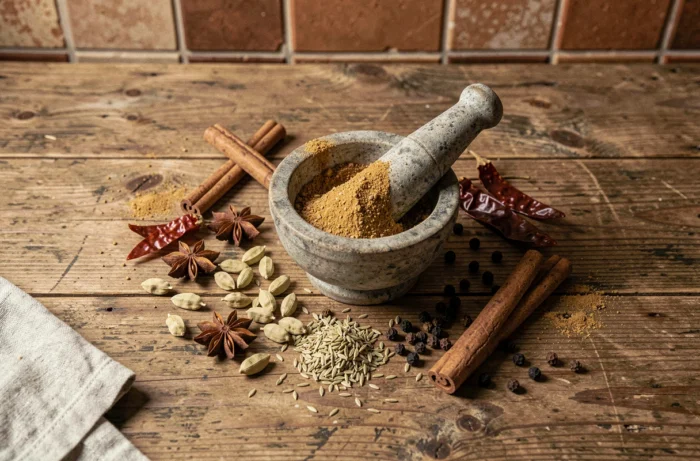
- Whole spices (coriander seeds, cinnamon sticks, star anise): store in an opaque jar, away from heat and moisture. They retain most of their aromatic potential for a long time.
- Ground spices (cumin, sumac, turmeric): keep in an airtight container, ideally in small quantities. Replenish your stock regularly if you use them infrequently.
- Dried herbs (thyme, basil, parsley, mint): more delicate than hard spices, they lose their color and fragrance more quickly. Buying them in small packs is the best approach.
- Blends: check the production date rather than the best-before date. A recently made blend retains a balanced flavor profile that you won’t find in a packet that’s spent months on the shelf.
A cupboard full of jars that have been open for months makes for bland dishes, even when you use the best brands. Buying less, but fresher, makes a bigger difference to flavor than buying more expensive products. Specialist suppliers such as Le Jardin D’Épices let you order small quantities and replenish your stock regularly.
Essential seasonings by cuisine: thyme, cumin, saffron and more
Rather than drawing up an endless list, let’s focus on the seasonings that cover the widest range of cuisines with the fewest products.
Cumin (whole or ground) is used in North African, Indian, Mexican and Middle Eastern cooking. It’s one of the most versatile seasonings. Whole seeds can be dry-toasted, bringing out deeper notes than ground cumin alone.
Dried thyme holds its flavor well and works in stews, marinades and grilled dishes. Along with basil and parsley, it forms the foundation of Mediterranean cooking.
Coriander seeds have bright, citrusy notes that are very different from those of fresh coriander leaves. The seeds pair with cumin in many traditional blends.
Saffron is in a class of its own: its high price reflects its extremely low harvest yield. Just a few threads are enough to color and flavor an entire dish. Buying it in threads rather than ground reduces the risk of adulteration.
Sumac, less familiar in France, adds a fruity tang that makes a great alternative to lemon juice on salads, grilled dishes and hummus. Its deep red color makes it easy to identify when ground.
Dried mint rounds out the essentials: indispensable in mint tea, it also adds a lift to grain salads, yogurt and cucumber-based sauces.
Most suppliers offer each product in several forms, making it easier to choose the right one for your intended use.

How to choose quality spices
Color, smell and texture are the three immediate indicators of freshness. Dull yellow ground turmeric has probably lost much of its active curcumin. Dried thyme that gives off no fragrance when rubbed between your fingers won’t add anything to a dish.
A few things to look out for when buying spices:
- Choose opaque containers or resealable pouches that protect spices from light.
- Check the ingredient list on blends: a good curry powder shouldn’t list salt or flavor enhancers among its first ingredients.
- Compare the net weight: some large containers hold very little product.
Value for money often comes down to packaging. Large resealable pouches are suitable for spices you use quickly. Small glass jars offer better protection for spices you use occasionally.
A well-stocked, practical spice cupboard depends less on the number of products than on how well they match the dishes you actually cook. Six to eight carefully chosen spices, bought in the form that suits how often you use them and stored properly, will cover most everyday cooking needs.