
In 2023, more than 70 countries saw their democracy index decline, according to the Economist Intelligence Unit. No parliamentary democracy strictly applies the separation of powers; the executive regularly intervenes in the legislative process. Some regimes hold regular elections while reducing access to information or limiting civil rights.
The divide around electoral participation has never been so clear: generations and social backgrounds diverge, while unexpectedly, citizen initiatives are outpacing traditional political mechanisms. We are witnessing debates about representativeness, serious questions about the functioning of institutions, and renewed distrust towards those in power. The foundations of democracy are being shaken to their very core.
The Foundations of Democracy: Principles, Institutions, and Essential Values
Casting a ballot does not solely define democracy. It is a set of principles, institutions, and balances between freedoms, rights, and duties. The separation of powers, inherited from Enlightenment philosophers, is not only found in textbooks: it plays out daily between parliament, government, and an independent judiciary. Each of these branches ensures checks on the others, giving this system its strength and legitimacy.
The rule of law imposes the same rule for all; no one is above it. Universal suffrage excludes no one based on gender, origin, or standard of living. Fundamental freedoms—expression, assembly, press—condition the vitality of public debate. As long as these freedoms thrive, democracy breathes.
But this architecture stands only with the constant vigilance of those who participate. Laws are debated, the government enforces them, and the independent judiciary reminds everyone of the limits to be respected. The balance remains fragile, exposed to the temptation of overly concentrated power or a creeping erosion of civil rights. To learn more about Qui-Peut.Info, you will access an in-depth analysis of the tools and dynamics of contemporary democracy.
What Challenges Do Democracies Face Today? Between Crises of Trust and Societal Changes
Trust, which once cemented institutions, is eroding. Voter abstention is reaching record levels, and the gap between citizens and the political sphere widens with each election. Populism finds fertile ground among disillusioned or angry citizens, undermining the principles on which democratic consensus was built.
In this tense climate, misinformation spreads on social networks, shaping perceptions and polluting public debate. It renders any nuance suspect, distorting perceived reality. Meanwhile, social fractures deepen, inequalities undermine collective bonds, and the temptation for exclusion has never been stronger.
As for the digital realm, it reshuffles the cards of collective engagement: associations, online communities, new discussion spaces, civil society relentlessly explores new avenues for action. Intermediate bodies are rethinking their roles, and the relationship with power is shifting towards unprecedented forms.
We can identify several major lines of fracture that define the current landscape:
- Crises of trust in established institutions
- Growth of populism in many countries
- Amplification of misinformation and distortion of public debate
- Notable increase in electoral abstention
- Exacerbation of social inequalities
- Transformation of political participation through the internet and social networks
Each of these challenges forces democracy to rethink itself, to open new paths, guided by dissent, social inventiveness, and the accelerated changes of the contemporary world.
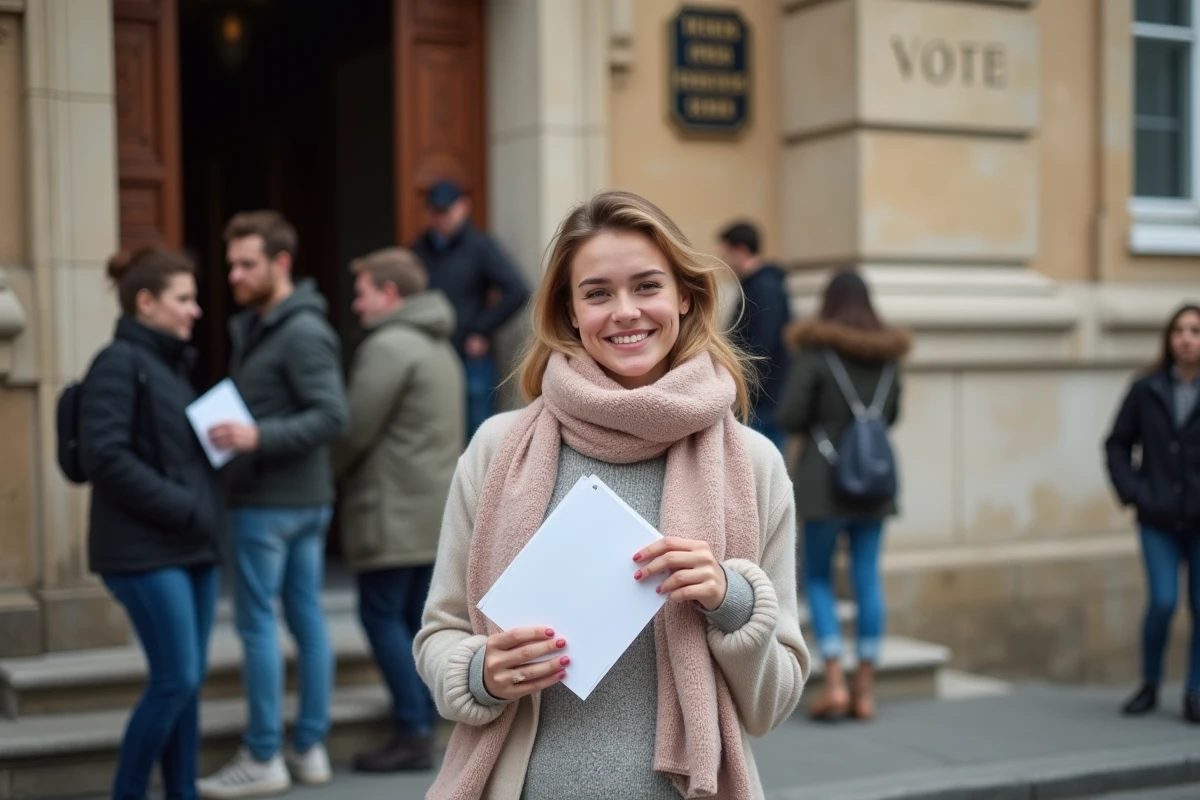
Civic Participation and Post-Democracy: Rethinking Political Engagement in the Contemporary Era
The very meaning of civic participation is being reexamined. Casting an envelope is no longer enough to embody a collective ideal. In this space of doubt arises the notion of post-democracy: a time when the political offer struggles to represent the diversity of expectations, where the democratic flame flickers.
In light of this observation, some citizens refuse to remain spectators. Participatory initiatives, open budgets, public consultations, randomly selected citizen conventions: everywhere, new forms of engagement are taking root. Everyone seeks to break the feeling of powerlessness, to create a direct dialogue with decision-makers. Social networks amplify these movements, facilitate organization, and provide unprecedented visibility to mobilizations.
Public officials find themselves obliged to adjust their practices, while civil society charts its own paths. Political engagement is no longer limited to institutions: it is experienced through spontaneous assemblies, digital forums, street or online mobilizations. Democracy is built every day, in the exchange of ideas, in civic vigilance, in the constant reinvention of collective tools.
Playing the democratic game means never considering the game as finished. Its vigor is reflected in each individual’s ability to seize it, to advance it, to refuse the comfort of routine, and to defend space for all voices. There lies, even today, its best promise for the future.