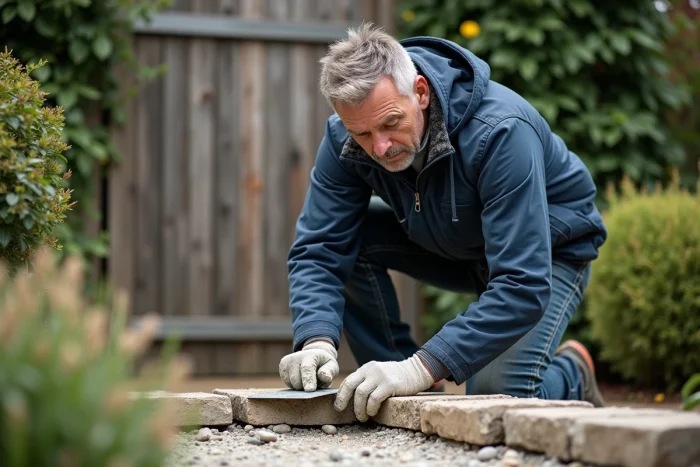
A renovated gate threshold without a level difference often proves to be more complex to achieve than a new threshold. Even when adhering to standards, ground movements or the restoration of old concrete impose unexpected adjustments.
The slightest inaccuracy in alignment or flatness causes play or blockage of the gate. Some professionals circumvent these constraints by adopting methods reserved for delicate repairs, rarely taught on traditional job sites. These techniques, derived from experience, ensure the stability and durability of the threshold under imperfect conditions.
Why does the gate threshold often pose problems in renovation?
The gate threshold concentrates all the constraints of an exposed structure: it must withstand passage, support loads, resist cycles of moisture, and endure daily impacts. On-site, each renovation project reveals its own challenges: cracked, sunken, deformed, worn concrete… It is impossible to apply a one-size-fits-all solution as situations vary widely. The observed defects, such as sinking, cracking, detachment, and unevenness, are visible traces of the weaknesses of the supporting ground. Poorly compacted or unstable ground weakens the structure over time and makes any restoration precarious.
Choosing the right method also involves considering the type of gate. Swinging, sliding, motorized: each configuration imposes its own requirements, tolerances, and pitfalls. A poorly adjusted threshold leads to gates that jam, motors that strain, and hard spots that develop. The adjustment of the gate threshold in renovation then requires tailored techniques, where the quality of the support diagnosis and preparation makes all the difference.
Materials and methods should not be chosen lightly. Fiber-reinforced mortar, injection resin, concrete formulated to withstand mechanical and climatic stresses… The range of solutions reflects the complexity of the pathologies. It is also essential to consider the surrounding drainage and the solidity of the base; otherwise, the repair will not hold up. Successfully completing the renovation means being able to identify the weak points of the existing threshold and building a implementation that meets the project’s needs as well as the nature of the soil.
Essential tips for adjusting an irregular threshold without stress
Before any intervention, it is crucial to conduct a precise diagnosis of the threshold. List the defects: sinking, cracking, lack of flatness. Check the stability of the ground: a compact support significantly reduces the risk of recurrence. This thorough analysis guides the choice of the method to adopt.
The preparation of the surface allows for no approximation. It is necessary to strip the support, remove debris and loose parts, and uncover anything that could harm adhesion. This is a critical step: without it, the repair will not hold. A perfectly cleared, solid base ensures the retention of the repair materials.
For the implementation phase, adapt the materials according to the nature of the encountered problem:
- fiber-reinforced mortar to fill degraded areas,
- epoxy resin on active cracks,
- reinforced concrete for heavily stressed thresholds.
A trowel ensures precision, and a laser level checks flatness. Temporary formwork helps maintain lines, while leveling refines the finish. If the threshold undergoes significant temperature variations, incorporate a expansion joint to prevent any future cracking.
Drainage should not be overlooked: a repaired but moisture-vulnerable threshold deteriorates in no time. Create an effective drainage slope and, if necessary, install a peripheral drain. A professional will be able to guide you towards the techniques and products best suited to each case.

How to ensure the durability of your repair and avoid common mistakes
A renovated gate threshold must last. Too often, neglecting the drying time causes issues within the first few months: micro-cracks, detachment, premature wear. Follow the manufacturer’s instructions to the letter for each product used. A mortar or concrete subjected too early loses all its resistance potential.
Once the repair is completed, the protection of the threshold becomes a priority. Apply a suitable protective coating or water-repellent treatment to preserve the surface from water and frost impacts. These solutions limit infiltration, the appearance of stains or moss, especially if the surrounding ground remains exposed. The peripheral drainage mentioned earlier complements this system by effectively evacuating stagnant water over the long term.
Maintenance is an ongoing process. Frequently clean the surroundings to avoid the accumulation of dirt or debris that could weaken the repaired area. Regularly inspect: look for any signs of wear or cracking. If a problem persists, consult a professional who can recommend an adjustment of the coating or localized repair to ensure the longevity of the project.
Here are the pitfalls to absolutely avoid:
- neglecting the protection of the threshold,
- choosing unsuitable materials,
- skipping the drying stages or forgetting regular cleaning.
These common oversights undermine the solidity of the work. Prevent them, anticipate, and give your gate threshold the robustness it deserves. On a job site, every detail counts: the difference lies in the perseverance and care given to each step.